
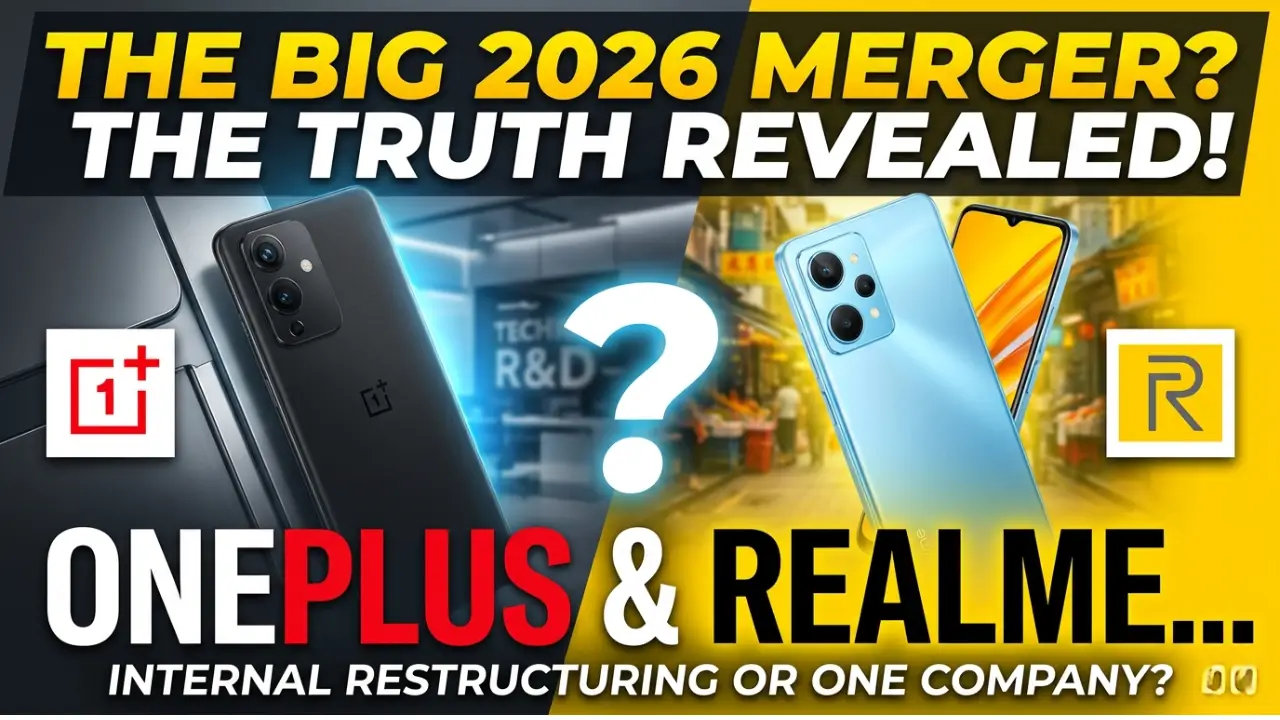
The smartphone industry has been discussing the OnePlus Realme Merger in 2026, but there is no official confirmation that both brands have become a single company for consumers. What is actually being seen is internal restructuring, where both brands may be working more closely at the backend level while still staying separate in the market. Users continue to see OnePlus and Realme as independent brands with different pricing, design approach, and audience focus.
At present, the OnePlus Realme Merger is better understood as coordination between teams rather than a public or visible merger.
Part Time Jobs – Best Opportunities for Students and Beginners
Why this merger topic started
The idea behind the OnePlus Realme Merger became popular after people noticed similarities in product design, hardware choices, and software experience between the two brands. This led to speculation that both companies are moving closer in terms of operations.
However, in large smartphone ecosystems, such coordination is common to reduce repeated development work and improve efficiency. It does not necessarily mean a full merger has taken place.
Internal coordination between brands
Behind the scenes, companies often share resources to manage costs and speed up development. In the case of OnePlus and Realme, this coordination may include:
- Shared engineering platforms for device development
- Combined supply chain planning for components
- Unified testing systems for quality control
These changes are usually internal and do not directly affect how users experience the phones in daily life.
Brand identity remains different
Even with ongoing discussions about the OnePlus Realme Merger, both brands continue to maintain their own identity.
OnePlus is generally focused on premium smartphones with performance-oriented features and a cleaner software experience. Realme targets budget and mid-range users with competitive pricing and feature-rich devices.
This separation allows both brands to serve different segments of the smartphone market without overlapping too much.
What users may notice in future
The OnePlus Realme Merger discussion does not mean immediate visible changes for customers. Phones will still be launched under separate brand names, and existing models will continue to function normally.
Over time, users may notice:
- Similar internal hardware components
- Faster software updates due to shared development
- More aligned product launch timelines
These changes are gradual and mostly happen behind the scenes.
Sony PS5 Pro Full Specs and Next Gen Features
Information summary
| Area | Current situation |
|---|---|
| Brand structure | Separate identities |
| Internal work | Some coordination |
| Customer impact | Minimal currently |
| Product strategy | Different for both brands |
| Official confirmation | Not announced |
Will pricing or availability change?
At this stage, the OnePlus Realme Merger does not directly affect pricing or availability of smartphones. Prices are still driven by competition, hardware costs, and market demand.
However, if internal efficiency improves, it could help both brands stay competitive in pricing, especially in markets like India where mid-range phones are highly competitive.
Why companies avoid full mergers
Full mergers in the smartphone industry are rare. Even if internal systems are aligned, brands are usually kept separate because:
- Each brand already has strong recognition
- Different pricing segments require different strategies
- Separate identities help maintain customer trust
Because of this, companies prefer internal restructuring instead of combining everything into one brand.
Vivo X300 FE Full Specifications
What to expect going forward
In the coming years, the OnePlus Realme Merger situation may lead to more shared technology and faster development cycles. However, both brands are expected to continue launching separate smartphones with their own branding and positioning.
Conclusion
The OnePlus Realme Merger in 2026 is mainly about internal coordination rather than a confirmed public merger. Both brands continue to operate independently while possibly sharing backend systems to improve efficiency. For users, this means gradual technical alignment but no immediate change in how smartphones are sold or experienced.